
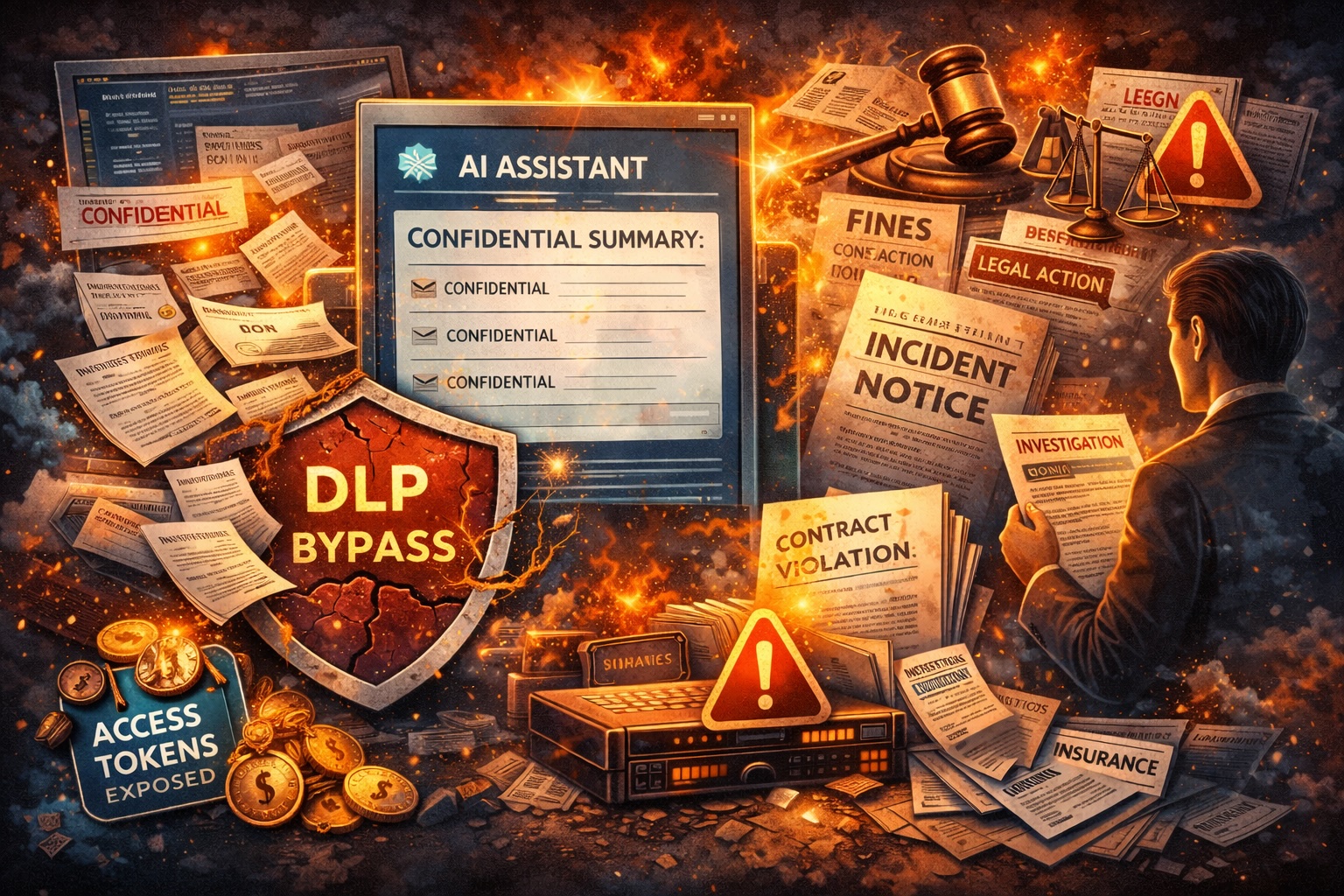
Perhaps most striking is the incident involving Microsoft 365 Copilot, where a software flaw led to the unauthorized summarization of confidential emails despite existing data loss prevention (DLP) policies and sensitivity labels. This breach of informational boundaries subverts not just technical safeguards, but the fundamental trust customers place in cloud service providers to uphold contractual and regulatory privacy obligations. Such a lapse inherently escalates operational risk, as confidential data disseminated beyond intended controls can trigger regulatory investigations, contractual penalties, and even legal action. For organizations relying on these controls as assurances to auditors and oversight bodies, the revelation of their circumvention undermines due diligence claims, potentially raising insurance premiums and damaging standing in future negotiations or mergers. As artificial intelligence becomes more deeply embedded into business processes, the lack of robust safeguards and effective incident response mechanisms further elevates organizational exposure, requiring a dynamic reevaluation of third-party risk and internal governance practices.
Failures in developer tooling security, as highlighted by critical vulnerabilities across popular Visual Studio Code extensions, introduce another layer of latent risk with profound business implications. Millions of downloads mean an attacker who exploits these flaws can pivot from an individual endpoint to the broader enterprise, leveraging developer privileges to access proprietary code, intellectual property, and even production environments. Moreover, the persistence of these vulnerabilities in the absence of timely maintainer response reveals gaps in supply chain management and vendor accountability. Lapses in extension security directly imperil a firm’s product integrity if malicious code or stolen data is introduced into the software development lifecycle—an outcome that could undermine customer trust and inflict brand damage. The indirect consequences—ranging from delayed product launches and increased regulatory scrutiny to potential derivative liability for downstream breaches—underscore the strategic necessity for holistic, proactive oversight of the entire application and tooling supply chain.
 Advanced threat actors, such as the state-aligned group exploiting a severe zero-day vulnerability in Dell’s RecoverPoint for Virtual Machines, present a different dimension of risk—persistent, resourceful, and capable of circumventing traditional defensive postures by targeting foundational infrastructure. Once this type of attacker gains access, the ensuing exposure threatens not only service continuity but also data sovereignty and operational resilience across virtualized environments. The use of sophisticated backdoors engineered to evade analysis complicates incident detection and containment, expanding the potential dwell time of adversaries within critical systems. Such breaches can destabilize strategic roadmaps, forcing abrupt infrastructure remediations and sapping executive bandwidth from forward-looking initiatives to crisis management. Secondary consequences may manifest in lost customer confidence, disruption of sensitive operations, and increased regulatory oversight—especially where obligations demand demonstrated maintenance of robust defensive measures. The demonstrated ability of these groups to quietly leverage vulnerabilities for months further erodes the notion of perimeter-based security and mandates a shift towards layered, intelligence-driven defense coupled with ongoing assurance of partner and vendor security practices.
Industry-wide, the revelation that tens of thousands of active credentials—including repository access tokens for GitLab and GitHub—were exposed in publicly served JavaScript files exposes a massive, systemic breakdown in secrets management. Embedded secrets in front-end code undermine not only the organization’s immediate defenses but also the credibility of application development teams themselves. When attackers can weaponize these tokens to commandeer code repositories, the business faces unprecedented risks: supply chain corruption, code tampering, and loss of intellectual property. Incident fallout can escalate rapidly as malicious actors exploit compromised assets to propagate further fraud or disrupt customer operations, with lasting reputational fallout and possibly years-long remediation efforts. This type of exposure fundamentally challenges existing compliance attestation and raises questions about the organization’s broader risk posture, ranging from cyber insurance terms to the culture of security across distributed development teams. It also introduces strategic dilemmas regarding the prioritization of prevention versus detection and response within limited security budgets.
The confluence of regulatory intervention and evolving legal mandates is exemplified by the Spanish court’s orders compelling major VPN providers to block access to piracy-related websites. This development signals a shifting landscape whereby technical intermediaries are becoming active participants in content regulation, with little opportunity for dispute or appeal. For multinational technology firms, responding to such legal precedents incurs both direct compliance costs and the more nuanced risk of global regulatory fragmentation. Aligning product offerings, privacy practices, and platform architecture to differing—and sometimes conflicting—regional mandates creates operational complexity, constrains growth strategies, and may reduce the overall attractiveness of certain markets. Moreover, these regulatory measures sharpen the scrutiny applied to technical providers’ role in facilitating or preventing illicit activity, necessitating substantial investment in monitoring, control, and audit mechanisms that go beyond baseline legal requirements.
In parallel, the measured response to recent supply chain attacks, such as Notepad++’s “double-lock” update verification, highlights both the business imperative and practical limitations of attempted resilience. While enhancing digital signature verification boosts confidence in update integrity, these architectural overhauls carry their own costs—resource diversion, increased operational overhead, and the potential for inadvertent disruption to legitimate use cases. However, failure to act decisively following a compromise risks not only repeat incidents but erosion of user trust, competitive disadvantage, and possibly exclusion from enterprise procurement processes that increasingly prioritize provable security measures. For open-source and commercial software providers alike, transparent, proactive engagement with their user base in the aftermath of such events serves as a key differentiator, impacting customer retention and long-term strategic viability.
Service reliability issues, such as the broad-impact Microsoft Teams outage, further highlight the operational dependencies that shape modern enterprises’ risk profiles. Downtime affecting communication and collaboration suites can have outsized repercussions—including stalled decision-making, delayed customer engagements, and diminished productivity—compounding the direct costs of service interruption. Business continuity plans are tested not just in the context of cyberattacks, but also in the everyday reliability of critical SaaS providers. Prolonged or repeated disruptions can prompt strategic reassessment of vendor partnerships, drive investments in multi-vendor redundancy, or even spur in-house development initiatives. Ultimately, the ability to maintain resilient communication channels during adverse events becomes a hallmark of operational maturity, informing stakeholder confidence and influencing competitive positioning.
Together, these incidents illustrate how cybersecurity events no longer present isolated technical concerns, but rather serve as pivotal inflection points that reverberate through legal, operational, financial, and reputational dimensions of any digitally enabled business. As attackers innovate and regulatory frameworks tighten, leadership must grapple with the reality that sustained organizational trust and differentiation now depend on demonstrable, proactive investments in risk mitigation, incident response, and continuous improvement. Failing to align information security with broader strategic objectives threatens not just the immediate bottom line, but the long-term resilience and adaptability that underpins sustainable enterprise value.
Advanced threat actors, such as the state-aligned group exploiting a severe zero-day vulnerability in Dell’s RecoverPoint for Virtual Machines, present a different dimension of risk—persistent, resourceful, and capable of circumventing traditional defensive postures by targeting foundational infrastructure. Once this type of attacker gains access, the ensuing exposure threatens not only service continuity but also data sovereignty and operational resilience across virtualized environments. The use of sophisticated backdoors engineered to evade analysis complicates incident detection and containment, expanding the potential dwell time of adversaries within critical systems. Such breaches can destabilize strategic roadmaps, forcing abrupt infrastructure remediations and sapping executive bandwidth from forward-looking initiatives to crisis management. Secondary consequences may manifest in lost customer confidence, disruption of sensitive operations, and increased regulatory oversight—especially where obligations demand demonstrated maintenance of robust defensive measures. The demonstrated ability of these groups to quietly leverage vulnerabilities for months further erodes the notion of perimeter-based security and mandates a shift towards layered, intelligence-driven defense coupled with ongoing assurance of partner and vendor security practices.
Industry-wide, the revelation that tens of thousands of active credentials—including repository access tokens for GitLab and GitHub—were exposed in publicly served JavaScript files exposes a massive, systemic breakdown in secrets management. Embedded secrets in front-end code undermine not only the organization’s immediate defenses but also the credibility of application development teams themselves. When attackers can weaponize these tokens to commandeer code repositories, the business faces unprecedented risks: supply chain corruption, code tampering, and loss of intellectual property. Incident fallout can escalate rapidly as malicious actors exploit compromised assets to propagate further fraud or disrupt customer operations, with lasting reputational fallout and possibly years-long remediation efforts. This type of exposure fundamentally challenges existing compliance attestation and raises questions about the organization’s broader risk posture, ranging from cyber insurance terms to the culture of security across distributed development teams. It also introduces strategic dilemmas regarding the prioritization of prevention versus detection and response within limited security budgets.
The confluence of regulatory intervention and evolving legal mandates is exemplified by the Spanish court’s orders compelling major VPN providers to block access to piracy-related websites. This development signals a shifting landscape whereby technical intermediaries are becoming active participants in content regulation, with little opportunity for dispute or appeal. For multinational technology firms, responding to such legal precedents incurs both direct compliance costs and the more nuanced risk of global regulatory fragmentation. Aligning product offerings, privacy practices, and platform architecture to differing—and sometimes conflicting—regional mandates creates operational complexity, constrains growth strategies, and may reduce the overall attractiveness of certain markets. Moreover, these regulatory measures sharpen the scrutiny applied to technical providers’ role in facilitating or preventing illicit activity, necessitating substantial investment in monitoring, control, and audit mechanisms that go beyond baseline legal requirements.
In parallel, the measured response to recent supply chain attacks, such as Notepad++’s “double-lock” update verification, highlights both the business imperative and practical limitations of attempted resilience. While enhancing digital signature verification boosts confidence in update integrity, these architectural overhauls carry their own costs—resource diversion, increased operational overhead, and the potential for inadvertent disruption to legitimate use cases. However, failure to act decisively following a compromise risks not only repeat incidents but erosion of user trust, competitive disadvantage, and possibly exclusion from enterprise procurement processes that increasingly prioritize provable security measures. For open-source and commercial software providers alike, transparent, proactive engagement with their user base in the aftermath of such events serves as a key differentiator, impacting customer retention and long-term strategic viability.
Service reliability issues, such as the broad-impact Microsoft Teams outage, further highlight the operational dependencies that shape modern enterprises’ risk profiles. Downtime affecting communication and collaboration suites can have outsized repercussions—including stalled decision-making, delayed customer engagements, and diminished productivity—compounding the direct costs of service interruption. Business continuity plans are tested not just in the context of cyberattacks, but also in the everyday reliability of critical SaaS providers. Prolonged or repeated disruptions can prompt strategic reassessment of vendor partnerships, drive investments in multi-vendor redundancy, or even spur in-house development initiatives. Ultimately, the ability to maintain resilient communication channels during adverse events becomes a hallmark of operational maturity, informing stakeholder confidence and influencing competitive positioning.
Together, these incidents illustrate how cybersecurity events no longer present isolated technical concerns, but rather serve as pivotal inflection points that reverberate through legal, operational, financial, and reputational dimensions of any digitally enabled business. As attackers innovate and regulatory frameworks tighten, leadership must grapple with the reality that sustained organizational trust and differentiation now depend on demonstrable, proactive investments in risk mitigation, incident response, and continuous improvement. Failing to align information security with broader strategic objectives threatens not just the immediate bottom line, but the long-term resilience and adaptability that underpins sustainable enterprise value.
Advanced threat actors, such as the state-aligned group exploiting a severe zero-day vulnerability in Dell’s RecoverPoint for Virtual Machines, present a different dimension of risk—persistent, resourceful, and capable of circumventing traditional defensive postures by targeting foundational infrastructure. Once this type of attacker gains access, the ensuing exposure threatens not only service continuity but also data sovereignty and operational resilience across virtualized environments. The use of sophisticated backdoors engineered to evade analysis complicates incident detection and containment, expanding the potential dwell time of adversaries within critical systems. Such breaches can destabilize strategic roadmaps, forcing abrupt infrastructure remediations and sapping executive bandwidth from forward-looking initiatives to crisis management. Secondary consequences may manifest in lost customer confidence, disruption of sensitive operations, and increased regulatory oversight—especially where obligations demand demonstrated maintenance of robust defensive measures. The demonstrated ability of these groups to quietly leverage vulnerabilities for months further erodes the notion of perimeter-based security and mandates a shift towards layered, intelligence-driven defense coupled with ongoing assurance of partner and vendor security practices.
Industry-wide, the revelation that tens of thousands of active credentials—including repository access tokens for GitLab and GitHub—were exposed in publicly served JavaScript files exposes a massive, systemic breakdown in secrets management. Embedded secrets in front-end code undermine not only the organization’s immediate defenses but also the credibility of application development teams themselves. When attackers can weaponize these tokens to commandeer code repositories, the business faces unprecedented risks: supply chain corruption, code tampering, and loss of intellectual property. Incident fallout can escalate rapidly as malicious actors exploit compromised assets to propagate further fraud or disrupt customer operations, with lasting reputational fallout and possibly years-long remediation efforts. This type of exposure fundamentally challenges existing compliance attestation and raises questions about the organization’s broader risk posture, ranging from cyber insurance terms to the culture of security across distributed development teams. It also introduces strategic dilemmas regarding the prioritization of prevention versus detection and response within limited security budgets.
The confluence of regulatory intervention and evolving legal mandates is exemplified by the Spanish court’s orders compelling major VPN providers to block access to piracy-related websites. This development signals a shifting landscape whereby technical intermediaries are becoming active participants in content regulation, with little opportunity for dispute or appeal. For multinational technology firms, responding to such legal precedents incurs both direct compliance costs and the more nuanced risk of global regulatory fragmentation. Aligning product offerings, privacy practices, and platform architecture to differing—and sometimes conflicting—regional mandates creates operational complexity, constrains growth strategies, and may reduce the overall attractiveness of certain markets. Moreover, these regulatory measures sharpen the scrutiny applied to technical providers’ role in facilitating or preventing illicit activity, necessitating substantial investment in monitoring, control, and audit mechanisms that go beyond baseline legal requirements.
In parallel, the measured response to recent supply chain attacks, such as Notepad++’s “double-lock” update verification, highlights both the business imperative and practical limitations of attempted resilience. While enhancing digital signature verification boosts confidence in update integrity, these architectural overhauls carry their own costs—resource diversion, increased operational overhead, and the potential for inadvertent disruption to legitimate use cases. However, failure to act decisively following a compromise risks not only repeat incidents but erosion of user trust, competitive disadvantage, and possibly exclusion from enterprise procurement processes that increasingly prioritize provable security measures. For open-source and commercial software providers alike, transparent, proactive engagement with their user base in the aftermath of such events serves as a key differentiator, impacting customer retention and long-term strategic viability.
Service reliability issues, such as the broad-impact Microsoft Teams outage, further highlight the operational dependencies that shape modern enterprises’ risk profiles. Downtime affecting communication and collaboration suites can have outsized repercussions—including stalled decision-making, delayed customer engagements, and diminished productivity—compounding the direct costs of service interruption. Business continuity plans are tested not just in the context of cyberattacks, but also in the everyday reliability of critical SaaS providers. Prolonged or repeated disruptions can prompt strategic reassessment of vendor partnerships, drive investments in multi-vendor redundancy, or even spur in-house development initiatives. Ultimately, the ability to maintain resilient communication channels during adverse events becomes a hallmark of operational maturity, informing stakeholder confidence and influencing competitive positioning.
Together, these incidents illustrate how cybersecurity events no longer present isolated technical concerns, but rather serve as pivotal inflection points that reverberate through legal, operational, financial, and reputational dimensions of any digitally enabled business. As attackers innovate and regulatory frameworks tighten, leadership must grapple with the reality that sustained organizational trust and differentiation now depend on demonstrable, proactive investments in risk mitigation, incident response, and continuous improvement. Failing to align information security with broader strategic objectives threatens not just the immediate bottom line, but the long-term resilience and adaptability that underpins sustainable enterprise value.
Sources
- Microsoft says bug causes Copilot to summarize confidential emails
- Glendale man gets 5 years in prison for role in darknet drug ring
- Spain orders NordVPN, ProtonVPN to block LaLiga piracy sites
- Flaws in popular VSCode extensions expose developers to attacks
- Chinese hackers exploiting Dell zero-day flaw since mid-2024
- Notepad++ boosts update security with ‘double-lock’ mechanism
- Microsoft Teams outage affects users in United States, Europe
- What 5 Million Apps Revealed About Secrets in JavaScript